
 P-MAN II - 8
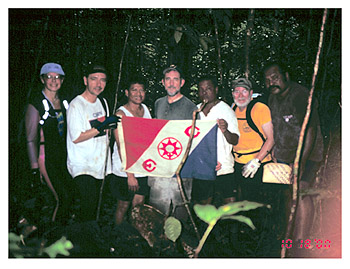 On
18 October, as we neared the end of our expedition, as has been the case
in the past, we started to find crash sites. As promised, Shallum Etpison
took us by boat to the west side of Ngeruktabel. There we left the boats
and, after climbing up a limestone wall, headed due east into the jungle,
led by Shallum's cousin, Albert. After ~ one hour of hiking, we came to
a small debris field. Most of the aluminum was covered with bits of coral,
which Albert said was put there by a particular type of bird as a large
nest (unfortunate coincidence?) Only a small amount of metal was visible.
Reid immediately recognized an aluminum fuel tank because he found a fuel
line and filter within the tank.
On
18 October, as we neared the end of our expedition, as has been the case
in the past, we started to find crash sites. As promised, Shallum Etpison
took us by boat to the west side of Ngeruktabel. There we left the boats
and, after climbing up a limestone wall, headed due east into the jungle,
led by Shallum's cousin, Albert. After ~ one hour of hiking, we came to
a small debris field. Most of the aluminum was covered with bits of coral,
which Albert said was put there by a particular type of bird as a large
nest (unfortunate coincidence?) Only a small amount of metal was visible.
Reid immediately recognized an aluminum fuel tank because he found a fuel
line and filter within the tank. 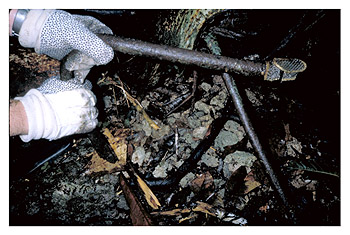 The fuel tank had a crimped edge joining the two halves
of the tank - a construction feature that was frequently used with American
fuel tanks, but also with some Japanese tanks as well. A survey around
the area did not yield any additional debris. Multiple attempts to take
a GPS reading failed in the dense canopied jungle. Shallum was told by
his cousin that another debris field existed within a mile radius, but
that it would take longer to find than we had time. We left this area
and debris field, knowing we would be coming back another time.
The fuel tank had a crimped edge joining the two halves
of the tank - a construction feature that was frequently used with American
fuel tanks, but also with some Japanese tanks as well. A survey around
the area did not yield any additional debris. Multiple attempts to take
a GPS reading failed in the dense canopied jungle. Shallum was told by
his cousin that another debris field existed within a mile radius, but
that it would take longer to find than we had time. We left this area
and debris field, knowing we would be coming back another time.
Shallum and Albert then took us to a second site to the north of Koror off of southwestern Babeldaob, amidst a series of coral heads. Albert said a fighter lay in less than 30 feet of water - he had snagged it while fishing and could see it from the boat. However, after an afternoon of all of us diving around many coral heads, we found nothing. Shallum said they would find it and show us next time. But at least we had found our first crash site of the expedition.
While traveling with Shallum, I recounted a story
relayed to me by the aviators of VMF-121. They tell the story (told to
them by Palauans) of a young blond pilot captured on Babeldaob and paraded
around the Palauans by his Japanese captors, prior to his being beheaded.
The aviators of VMF-121 believe this man was Lt. Virginius Perry, shot
down near Ngatpang Bay on 11 January 1945. Shallum had heard of a similar
story and believed that the site where the execution took place could
be found. He said he would look into it further.

